Becoming Architecture: From Line to Form
Partner Programme
12 Sept All day
13 Sept All day
14 Sept All day
15 Sept All day
16 Sept All day
17 Sept All day
18 Sept All day
19 Sept All day
20 Sept All day
Ideaworks London Experience Centre
206 Great Portland Street
London
W1W 5QJ
Supported by
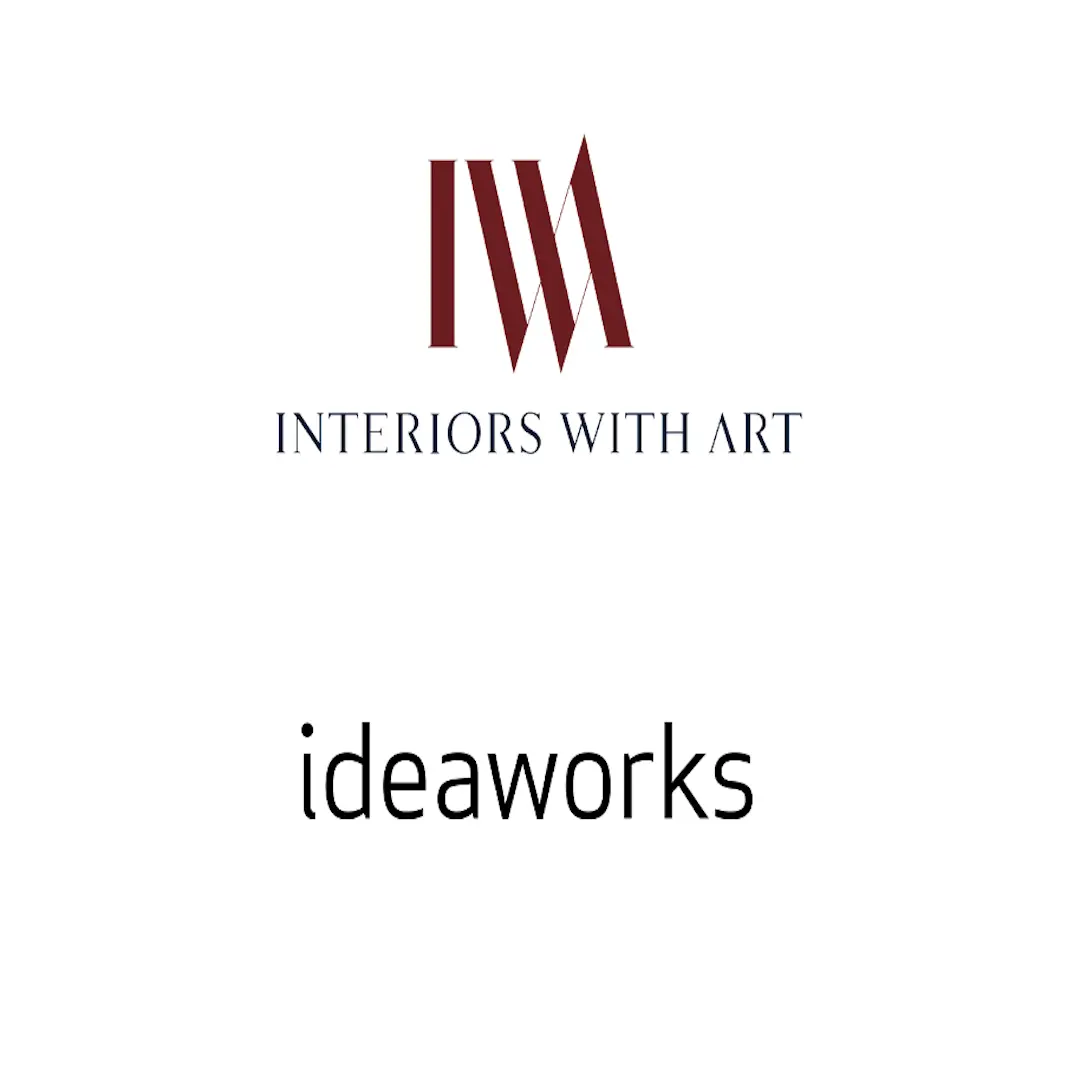
Becoming Architecture follows a single column across the window — from wireframe sketch, through scaffolding, into a finished interior. With Ideaworks, light shifts with the hours, cool to warm, keeping architecture in motion: an idea becoming form, or a space returning to thought.
A single architectural element, a column, evolves across the window's three sections, tracing the journey from abstract thought to physical reality. The palette deepens with it: pale, light tones for the conceptual stage, growing darker and more grounded as the space is realised.
In the first section, the column appears as a wireframe, a three-dimensional sketch in a minimal space. At the centre it enters construction: fragmented and unresolved, surrounded by scaffolding and machinery, holding the tension between idea and execution. In the final section, the column stands fully realised within a composed interior, where material, light and atmosphere resolve into an inhabitable space.
The installation reads in both directions: an evolution from concept to completion, or a finished space deconstructed back to its first idea.
Lighting is a primary design tool, each layer revealing a different stage of the journey. Uplighting draws out the depth and texture of the curtains until warp and weft become visible. Backlighting silhouettes the cut-out elements, echoing the abstraction of the concept stage. Task lighting marks the construction phase, focused on moments of making, while ambient light sets the character of each space.
In collaboration with Ideaworks, the lighting is programmed to evolve through the day, following a circadian rhythm: cool, precise light in the conceptual stage warming into deeper, more immersive tones in the completed interior. The installation never sits still. It is architecture presented as a process, not a fixed outcome.